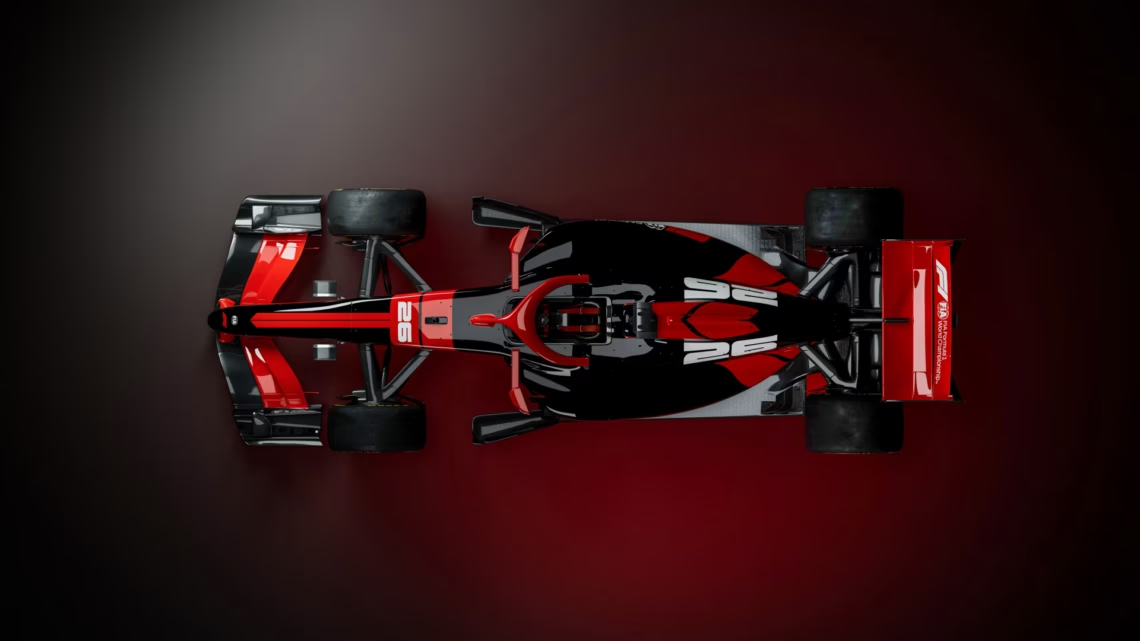
Cars, power units and new teams- everything that will be changing in 2026 is compiled below for your convenience.
The FIA has announced the new regulations for the 2026-2029 period and with car launches and preseason testing it is imperative for fans to know what to expect!
Formula 1 will show an adjusted aerodynamic package that will feature shorter and more narrow cars. This will also mean that the supercars will be lighter and more nimble, which should make wheel to wheel racing even more exciting. A shorter wheelbase and smaller tyres should mean that the machines should be more responsive through corners. In the past seasons eagle-eyed fans could spot little arches over the tyres which will be gone in 2026- this also keeps the cars cleaner and therefore lighter.
In the last regulation period (2022-2025) there was a lot of focus on flooring, especially with issues for multiple teams. These should no longer be a problem because the new regulations state that all teams require a flatter floor with extended diffusers and larger openings. This higher ride-height means less downforce and more possibilities for setups that range in driving styles.
The front and rear wings will also be updated. Their composition will be simpler which can be translated to fewer moving parts. The rear wing will no longer feature beams and the front will be narrower to match the rest of the car. In turn the front wing’s outer section will be up for development which could give a team a certain advantage. The front wing has a huge impact on the car’s overall aerodynamics so these decisions will heavily impact the teams’ success stories.
The most impressive new feature on the wings is ‘Active Aero’. The cars can adjust the angle of both their front and rear wing elements depending on where they are on track. Low-drag mode can be activated on designated straights whilst the flaps stay closed during corners to maintain grip. These functions will be available to every driver on every lap which hopefully will lead to more racing battles and a more entertaining viewing experience for fans.
Active Aero means there is no longer a need for DRS – and all the female fans will love to see it go, as they no longer can be condescendingly asked to explain the Drag Reduction system.
Being within one second of the car you are following will still be awarded with the new Overtake Mode though. This new mode will use electric energy to further a driver’s attack. These are linked to detection points.
There will also be new buttons to regulate the activation of maximum power from the engine and battery. It has been named ‘Boost Button’ and drivers can use it during attacks as well as defensive maneuvers.
Drivers will now oversee their battery recharge. Working with their race engineer, the duo can select from a range of different modes to recharge their battery, from braking and engine energy. That means they have three tools they can use tactically when in the heat of battle.
While the core of the powerunit is still a 1.6-litre V6 turbo hybrid, the power balance has shifted significantly. From 2026, the internal combustion engine output has been cut while the electric motor has tripled, meaning we’ve got roughly a 50-50 power split between petrol and electric. This makes the power units more road relevant and the change is a huge step in Formula 1’s sustainability goals.
To power the new hybrid unit, the car’s Energy Recovery System (ERS) can now recharge the battery with twice as much energy per lap. This can come through things like recovery under braking or lifting off the throttle at the end of straights.
For the first time ever, Formula 1 power units will be running Advanced Sustainable Fuels, which have been trialled in F2 and F3 in 2025.
Safety has always been a big factor in any and all regulation periods and 2026 is no different. The roll hoop has been strengthened to hold 23% more weight and the front impact structure design has been improved to aid drivers in high impact crashes.
To sum all that up: 2026 will bring faster, lighter cars and more overtaking (hopefully!). For teams and drivers there will be new challenges waiting for them in the form of new tech and new rules. Following a car through a corner should become easier whilst getting the best out of your car will be more challenging. All of this is possible through news cars with more sustainable fuel and smart energy usage.
Featured image taken from: https://www.formula1.com/en/latest/article/everything-you-need-to-know-about-the-new-f1-rules-for-2026.48bv0VTxhIlhrQXmxercXk (19.01.2026)